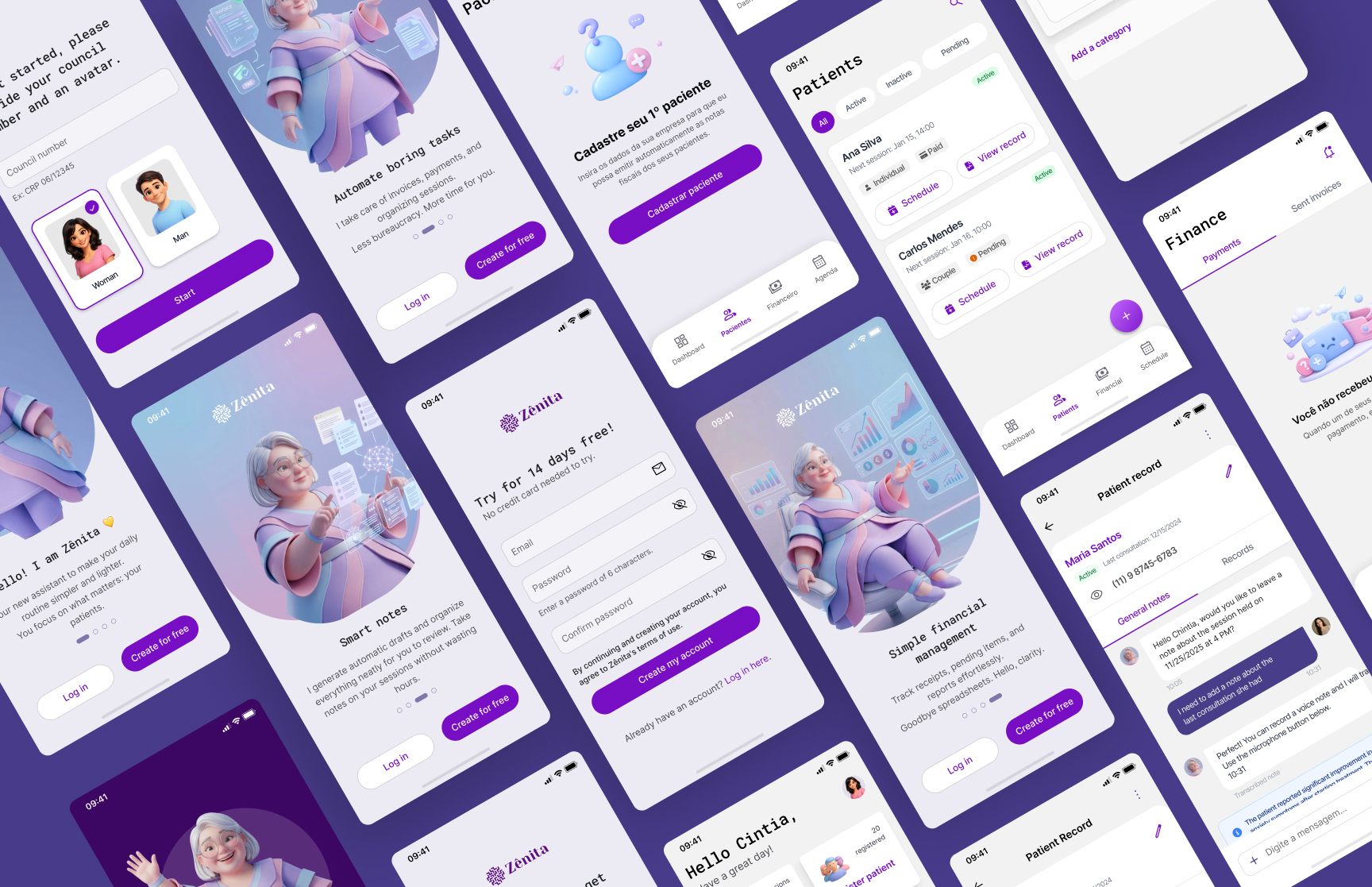
Zênita Plus Assistant
By mapping the daily workflow of independent healthcare professionals, we aim to design a single, calm practice-management experience, supported by a backend infrastructure that automates payments, tax invoicing, and clinical documentation.



THE PROCESS
A research-led design and validation process
We treated Zênita not as a list of features but as one opinionated workflow, and we earned the right to build it through research before design.
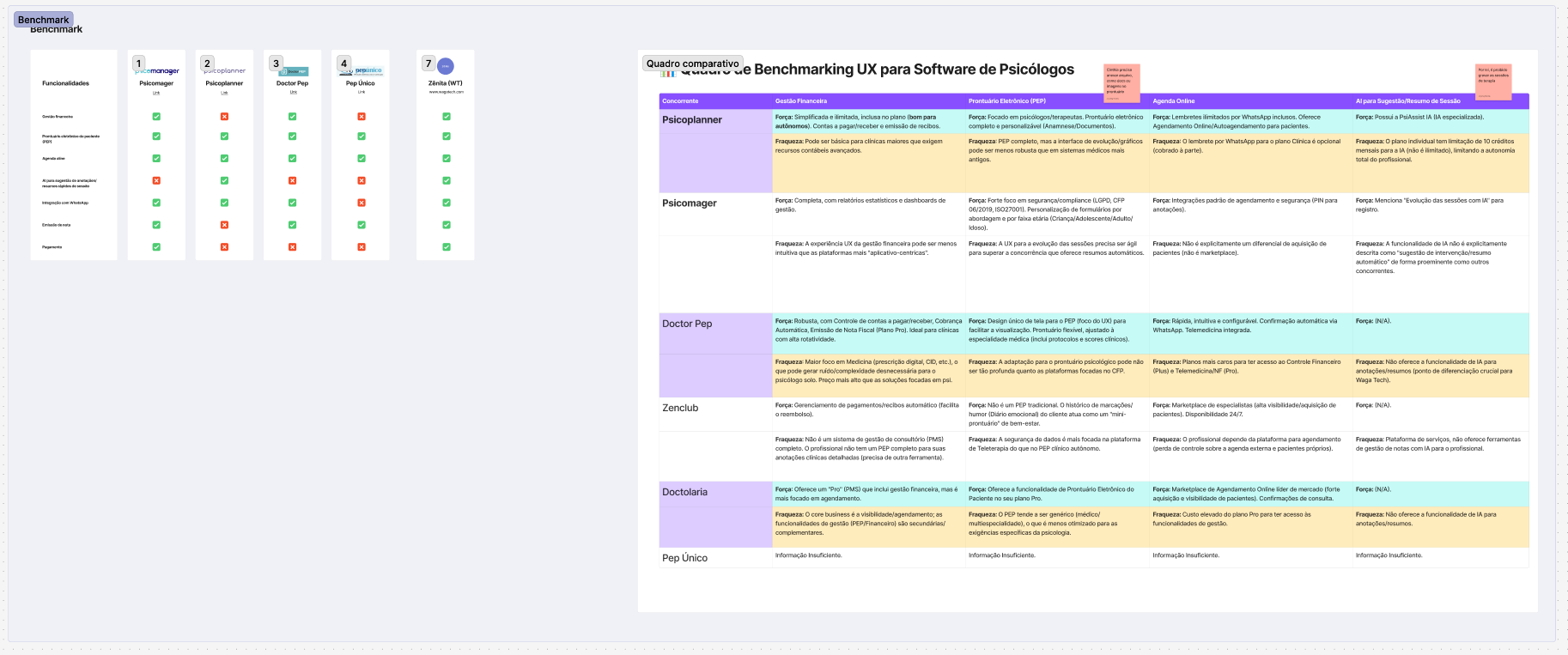
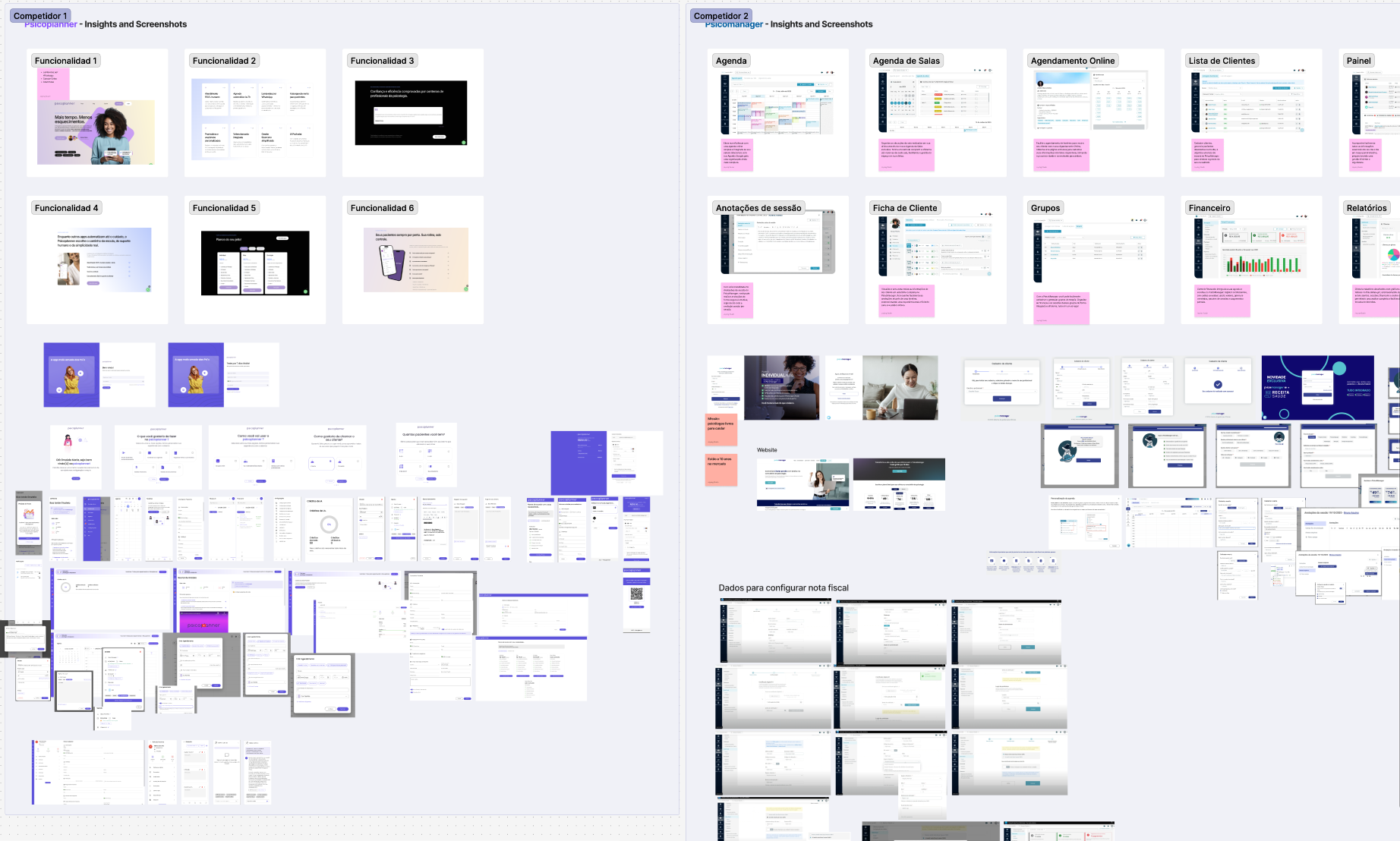
We started by mapping the market and the competition together
Desk research sized a fast-growing opportunity — a global healthcare-SaaS market projected to reach US$ 42.5B by 2033 (14.4% CAGR), with Brazil leading Latin America's healthtech ecosystem and surfaced a clear domestic gap: most independent professionals run their practice on spreadsheets, generic apps, or pen and paper.
We then benchmarked six players covering the three ways these professionals solve their workflow today: management suites built for psychology clinics (Psicomanager, Psicoplanner), electronic patient-record tools (Doctor Pep, Pep Único), and patient-facing marketplaces and benefit platforms (Doctoralia, Zenclub). The matrix made the whitespace obvious — the suites are heavy and desktop-bound, the PEP tools own the record but not the billing, and the marketplaces chase the patient rather than running the practice. No one offered a single, mobile-first tool that handled payments, tax invoicing, and clinical notes for the autonomous professional.
We validated that gap with the people who live it
A qualitative survey of independent health professionals — predominantly psychologists, mostly working hybrid, confirmed the thesis: 84.7% use no dedicated management software, and they rank financial control and invoice issuance as their single hardest task, ahead of no-shows and scheduling. The same group showed real appetite for AI support, with the majority pointing to automatic session-note summaries as the most valuable feature, and a price tolerance concentrated in the R$ 50–100/month range. These findings became the product's spine: automated NF-e, integrated finances, WhatsApp reminders, and AI-assisted notes — built in that order of priority.
Then we designed to test, not to impress
Before writing production code, we built the first wireframes and mockups and put them in front of users — validating the flow and the copy at the same time, so we could iterate cheaply on both. Usability testing ran in two stages: first on the concept (the wireframes and core flow), then on the real app and website. Testing Zênita's writing alongside its interface let us refine wording and navigation together, critical for an audience that is short on time and often wary of new tools.
The result is a product that feels less like software to learn and more like a calm companion that simply takes the bureaucracy off the professional's plate.



THE RESEARCH
We combined secondary research with a survey of health professionals, validating the concept and product with users. Findings showed the main pain point is financial control and tax invoicing, not scheduling.
US$ - Projected healthcare-SaaS market by 2033 (14.4% CAGR)
Brazilian health professionals in the target market
Addressable professionals, early adopters + pragmatists
Responses to the qualitative survey